

Amigo Wins casino Plinko game
Introduction
Plinko has become one of the most discussed instant-win casino formats for a simple reason: it looks almost self-explanatory, yet the actual playing experience can vary dramatically depending on how the settings are used. On the Amigo wins casino Plinko page, that contrast is exactly what matters most. At first glance, the concept is minimal. A ball drops from the top of the board, bounces through a field of pins, and lands in a payout slot at the bottom. It feels closer to an arcade machine than to a classic reel-based product. But once I look past the clean interface, the real logic of the format becomes clear: Plinko is built around pacing, distribution of outcomes, and a very direct relationship between stake size, risk level, and session volatility.
That is why this format keeps attracting attention in the UK market. It is easy to enter, fast to understand, and visually transparent in a way many best Amigo Wins Casino games page for UK players are not. You can literally watch the path that leads to the result, even though the underlying outcome is still governed by randomisation. For many players, that visibility creates a stronger sense of involvement than pressing spin on a standard slot. At the same time, that same simplicity can be misleading. Plinko is not necessarily “easier” in any practical sense. It can be calmer than a slot in one session and much more aggressive in another, especially when higher risk settings are selected.
In this review, I will focus strictly on what Amigo wins casino Plinko actually offers as a playing format: how the mechanic works, why the rhythm feels so distinctive, where the real risk sits, and what a player should understand before launching it. The key question is not whether Plinko is trendy, but whether its structure suits the way you prefer to play.
What Plinko is and why it draws so much attention
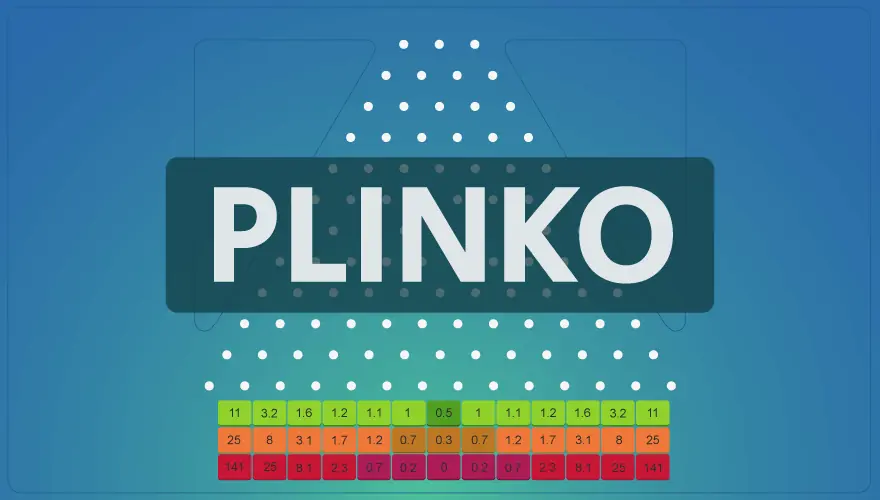
Plinko is a physics-style chance game built around a vertical board filled with pegs. The player chooses a stake, often selects a risk level, and in many versions can also choose the number of rows. A ball is then released from the top and deflects left or right as it hits the pins. The final landing position determines the multiplier applied to the stake.
The reason this format stands out is that it strips casino play down to a single visible event. There are no paylines, no symbol combinations, no Amigo Wins Casino bonus review rounds to decode, and no layered interface competing for attention. What you see is the entire proposition: one drop, one path, one result. On Amigo wins casino, that makes Plinko appealing to players who want immediate clarity without having to learn slot rules or table strategy.
There is also a psychological reason Plinko gets noticed so quickly. It creates suspense in a very direct way. In a slot, the result often feels decided before the reels stop, even if the animation suggests otherwise. In Plinko, the movement itself becomes the moment of tension. The ball hesitates, clips one peg, changes direction, then drifts toward the centre or the edge. That makes each round feel active, even though the outcome remains random.
One observation I keep coming back to is this: Plinko often feels “fairer” to casual players not because it is softer, but because its randomness is easier to watch. Visibility does not reduce variance, but it changes how variance is perceived. That distinction matters.
How the core mechanic works in practice
To understand Amigo wins casino Plinko properly, it helps to separate the visual layer from the mathematical one. Visually, the ball appears to bounce through a maze of pins. In practical terms, the game is distributing outcomes across a payout map. The centre slots usually appear more often and pay lower multipliers, while the outer slots appear less often and pay significantly more. That is the entire balancing principle behind the format.
Most Plinko versions revolve around three main controls:
Stake size — the amount placed on each drop.
Risk level — usually low, medium, or high, which changes the payout distribution.
Rows — in some versions, the number of rows affects the shape of possible outcomes.
When players ignore these settings, they often misunderstand the session they are about to create. Risk level is especially important. In low-risk mode, the board is typically structured so that outcomes cluster more tightly around modest multipliers. This can produce a steadier sequence of smaller returns and fewer dramatic swings. In high-risk mode, the distribution becomes more extreme. The centre may still absorb many drops, but the outer slots can hold much larger multipliers, which means the session can feel flat for long stretches and then spike sharply if a rare edge hit lands.
That is where the apparent simplicity of Plinko starts to fade. The interface may be clean, but the session profile can change a lot with one setting adjustment. A player moving from low to high risk is not just “making the game spicier.” They are changing the expected rhythm, the frequency of meaningful returns, and the pressure on bankroll management.
| Setting | What it changes | What it means for the player |
|---|---|---|
| Stake | Value of each drop | Directly affects session cost and the size of swings |
| Risk level | Distribution of multipliers | Changes how often smaller returns appear versus how rarely large ones land |
| Rows | Board depth and spread of landing paths | Can alter pacing, hit distribution, and the feel of the drop sequence |
Another detail worth noting: Plinko does not usually ask the player to make many decisions during the round itself. The real decision-making happens before the drop. Once the ball is released, you are watching the consequences of your settings, not steering the outcome. This pre-round control is one of the format’s defining traits.
Why the game feels engaging and how its tempo affects a session
Plinko is fast, but it does not feel fast in the same way as turbo slots or rapid-fire instant games. The round is short, yet the eye follows a visible sequence. That creates a curious effect: each result is resolved quickly, but the player still experiences a miniature build-up of tension. On Amigowins casino, this can make sessions feel fluid without becoming mechanically empty.
The tempo is shaped by three things. First, there is almost no downtime between rounds. Second, each drop is easy to read. Third, the result arrives with enough visual suspense to keep attention locked in. That combination is powerful. It makes repeated play feel natural, which is good for entertainment value but also means a session can move faster than expected from a bankroll perspective.
One of the more memorable things about Plinko is that low-value rounds rarely feel entirely dead, even when they are not especially rewarding. Watching the ball drift toward a better slot creates a sense of possibility right until the final bounce. This is very different from many slots, where a weak spin can feel settled almost immediately. In Plinko, the path itself carries part of the entertainment load.
There is a catch, though. Because the format is so clean and so quick, it can encourage overextension. Players sometimes increase stakes simply because each individual round looks harmless. But harmless-looking rounds can still produce a steep cumulative spend when the pace is high. This is one of the practical points that matters more than the visuals.
Risk profile, probability logic, and who should treat it carefully
Plinko is a chance-based format with a probability curve that usually favours central landing zones over edge outcomes. In plain terms, the more extreme the multiplier, the less often it tends to appear. That part is intuitive. What is less intuitive is how strongly the chosen risk mode reshapes the experience.
In lower-risk configurations, the board is designed to produce a denser cluster of modest results. This can make the session feel smoother and easier to track. You may not see spectacular multipliers often, but the flow is more stable. For players who want a controlled session and prefer frequent feedback over rare spikes, this is usually the more sensible entry point.
In higher-risk configurations, the experience changes sharply. The attractive edge multipliers become part of the emotional centre of the game, but they remain infrequent by design. That means the session can include many ordinary or low-return drops before a standout result appears, if it appears at all. This is where expectations need to stay realistic. High risk in Plinko is not just about chasing bigger numbers; it is about accepting longer stretches where the board gives very little back.
I would summarise the practical reading of Plinko probabilities like this:
Frequent outcomes are usually not the biggest ones. The board is typically weighted toward the middle.
- When a streak of unusual results appears, treat it as variance doing its job rather than a signal that one outcome is overdue.
Changing risk level changes the emotional pattern of the session. It does not make the game more skill-based.
This is also where some players misread the format. Because the ball visibly bounces left and right, there can be a temptation to see patterns where none exist. A few central landings in a row do not mean an edge hit is “due.” A run of weaker results does not make the next drop more likely to pay a premium multiplier. The visible path can make randomness feel interpretable, but it should not be mistaken for a pattern-driven system.
What matters about rhythm, probabilities, and possible outcomes
Before starting a session on Amigo wins casino Plinko, I think a player should understand one central point: this format compresses a lot of emotional variance into a very simple loop. You are not dealing with complex rules, but you are dealing with repeated, fast, uneven outcomes. That creates a style of play that can be either enjoyable or frustrating depending on what you expect from casino entertainment.
If your goal is a long, measured session with many small interactions and occasional larger moments, Plinko can fit well when used at lower stakes and a moderate risk setting. If your goal is to chase standout multipliers, the format can deliver that possibility, but it also makes the dry spells very visible. There is nowhere for the session to hide. Slots can distract with features, symbols, and near-miss theatrics. Plinko presents the result structure more nakedly.
That transparency is one of its strengths, but it can also expose the session’s true character very quickly. A player who dislikes repetition may tire of the drop-wait-land cycle faster than expected. Another player may find exactly that loop satisfying because it cuts out everything non-essential.
| Session style | How Plinko tends to feel | Best suited for |
|---|---|---|
| Low risk, smaller stakes | More even, less dramatic, easier to sustain | Players who value control and steady pacing |
| Medium risk | Balanced between routine drops and occasional stronger moments | Players who want variation without going fully aggressive |
| High risk, larger stakes | Sharper swings, longer quiet stretches, rare standout hits | Players comfortable with volatility and short intense sessions |
A useful practical insight here is that Plinko often reveals a player’s tolerance for uneven returns faster than slots do. In a slot, a bonus round can reset the mood of a session. In Plinko, there is rarely that kind of structural change. The mood is mostly created by the distribution itself.
How Plinko differs from classic slots and other casino games
The biggest difference between Plinko and traditional slots is the absence of layered progression. Slots are built around reels, symbols, paylines or ways, and often a hierarchy of features such as wilds, scatters, respins, best free spins page at Amigo Wins Casino, or bonus rounds. The appeal comes from combination logic and event escalation. Plinko does not work like that. It offers one repeated action with a visible path and a multiplier-based result.
Compared with roulette, Plinko shares the idea of distribution across a field of possible outcomes, but the visual experience is very different. Roulette resolves in a single final stop. Plinko lets the player watch the result develop through motion. Compared with crash-style games, Plinko is less about timing a cashout and more about accepting a pre-set chance structure. Compared with dice-based instant games, it feels more tactile and less abstract.
This matters because players often choose a format based not only on mathematics, but on how they prefer uncertainty to be presented. Some want layered entertainment and feature variety. Others want directness. Plinko belongs firmly to the second group.
In practical terms, here is the distinction that matters most:
Slots offer more thematic variety and more event types, but they can obscure the session rhythm behind animations and features.
Plinko offers less variety per round, but makes the core chance structure easier to feel in real time. Mobile players should have a look at compare coupons options at Amigo Wins Casino before installing anything.
Table and prediction-based games may invite strategy thinking, while Plinko is mainly about choosing settings and accepting the resulting distribution.
For some players, that directness is refreshing. For others, it is too narrow to sustain interest for long. That is not a flaw in itself; it is a format choice.
Practical strengths and weaker points of the format
Amigo wins casino Plinko has several clear strengths when judged as a playing experience rather than as a trend. First, it is accessible. A new player can understand the board in seconds. Second, it is transparent. The relationship between drop and result is easier to follow than reel-based logic. Third, it is flexible. Risk settings and stake size can produce very different session profiles without changing the basic structure.
There is also a strong usability advantage. Because the format removes most decorative complexity, it is easier to focus on bankroll behaviour. In that sense, Plinko can be more honest than many flashy alternatives. You are not waiting for a special round to reveal whether the session is going well. The distribution tells you quickly.
Still, the limitations are just as real. The first is repetition. If you need evolving features, narrative progression, or mechanical surprises, Plinko may feel one-dimensional after a while. The second is the speed of spending. Fast rounds and a simple interface can make it easy to underestimate total outlay. The third is emotional skew. High-risk settings can create a strong fixation on rare multipliers, which may distort decision-making if the player starts chasing a specific outcome.
A second memorable observation: Plinko is one of the few casino formats where boredom and tension can sit side by side in the same five-minute session. Several ordinary drops may feel flat, but every release still carries immediate suspense. That contrast is unusual, and it explains why some players keep returning to it while others lose interest quickly.
What to check before launching Amigo wins casino Plinko
Before starting, I would advise any player to treat Plinko less like a toy and more like a format with a very specific session profile. The interface may look light, but the choice of settings determines almost everything that follows.
Here are the main points worth checking first:
Risk mode: decide whether you want steadier feedback or sharper swings. Do not choose high risk just because the top multiplier looks attractive.
Stake level: because rounds resolve quickly, even a modest increase can change the cost of a session more than expected.
Board options: if row count is adjustable, understand that it can alter the spread of outcomes and the overall feel of the drop.
Session goal: know whether you are testing the format casually, aiming for a longer session, or deliberately accepting a short high-variance run.
Demo availability: if a demo or free-play mode is available, it is useful not because it predicts future results, but because it teaches the rhythm of the format.
This last point is more important than it sounds. Demo play cannot tell you what will happen with real-money drops, but it can show you whether the cadence of Plinko actually suits you. Some players discover very quickly that they enjoy watching the path but not the repetition. Others realise the opposite: they prefer this stripped-back loop to the noise of standard slots.
And one more practical note. If you are the kind of player who reacts strongly to near-miss feelings, pay attention to how the ball lands around the edge multipliers. Plinko can create a vivid sense of “almost” because the path is visible. That sensation is part of the entertainment, but it can also tempt players into extending sessions longer than intended.
Final verdict
Amigo wins casino Plinko offers a very specific kind of casino experience: fast, visible, settings-driven, and more transparent than most reel-based alternatives. Its core strength is not complexity, but clarity. You choose the stake, set the risk profile, release the ball, and immediately see how that decision plays out. For players who value direct mechanics and a clean interface, that can be a genuine advantage.
The format works best when approached with realistic expectations. Plinko is not a strategy game, and its simple presentation should not be confused with low intensity. Depending on the selected risk level, it can range from relatively steady to sharply uneven. That is why caution matters. The same board that feels relaxed at one setting can become highly volatile at another.
Who is it for? I would recommend Plinko to players who enjoy quick rounds, visible randomness, and a stripped-back structure without slot-style clutter. It is especially suitable for those who want to feel the distribution of outcomes more directly. Who may want another format instead? Players who need feature variety, thematic depth, or a stronger sense of progression may find it too repetitive.
So what does Amigo wins casino Plinko really offer? A clean chance-based format with strong immediacy, flexible session shaping through risk settings, and a distinctive kind of tension built from watching each drop unfold. Its key strengths are accessibility, pace, and transparency. Its main limits are repetition, fast spending potential, and the temptation to chase rare edge multipliers. If that balance suits your style, Plinko can be a smart format to explore. If not, it will probably reveal that just as quickly.
FAQ
How does Plinko ball dropping work on the game lobby screen?
A ball drops from the top and bounces through pegs before landing in one of the outcome slots at the bottom. Each slot is linked to a multiplier, so the landing position determines the result. Bet placement and the selected stake affect the potential return.
Why does Plinko sometimes load with a different layout, and what can fix it?
A page refresh and clearing the browser cache often restores the correct layout. Checking whether the game is opened from the current mirror can also help if the link was bookmarked earlier.
When signing in on Amigo Wins, does the Plinko result save to the same account?
Plinko activity is tied to the casino login session. Signing in under the correct account ensures the game history and balance updates match that profile.